


Let’s start with an important line in the sand. Telling someone with heart concerns to jump into a cold plunge without context or screening is irresponsible. Cold water immersion is not gentle. It’s not passive. For anyone interested in cardiovascular performance, resilience, or long-term heart health, it needs to be understood for what it is: a powerful stressor.
That said, for trained individuals using it intentionally, cold exposure offers a rare opportunity. It places the heart and blood vessels under sudden, extreme demand, then asks them to recover quickly. Over time, that cycle can drive very specific, measurable adaptations. This isn’t about vague claims of “better circulation.” It’s about how the cardiovascular system responds, adapts, and becomes more resilient under pressure.
Table of Contents
The Acute Cardiac Event: Understanding The Cold Shock Response
The moment you enter an ice bath, your body reacts fast. The primary goal is protecting core temperature, and that triggers a cascade of cardiovascular responses almost instantly.
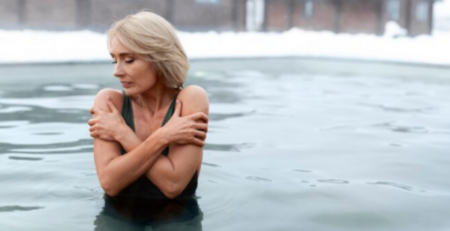
First comes the cold shock response. You experience a sharp inhale or gasp, followed by a surge in sympathetic nervous system activity. Heart rate rises quickly. Blood pressure spikes as blood vessels in the skin and extremities constrict to conserve heat. For a brief window, the heart is working harder and against increased resistance at the same time.
At the same time, the diving reflex kicks in, especially with face immersion. This ancient mammalian reflex tries to slow the heart rate (bradycardia) to conserve oxygen. What you actually experience is a tug-of-war between these two systems. In most people, the sympathetic response dominates early, which explains the racing heart sensation.
This short-lived event is the most demanding phase of cold exposure. For individuals with undiagnosed or unmanaged cardiovascular conditions, this is where cold plunge risks exist. That’s why medical screening is not optional if heart health is part of the equation.
A Workout for Your Blood Vessels
This is where the long-term conditioning happens. Your blood vessels are not just pipes; they’re active, muscular organs. The intense, whole-body vasoconstriction caused by the cold is a maximal contraction for the smooth muscle in your artery walls.
Repeated exposure challenges this system regularly. Over time, blood vessels tend to become more responsive and elastic, a quality known as vascular compliance. More compliant vessels can regulate blood pressure more smoothly and reduce the workload placed on the heart during daily fluctuations in demand.
Observational research on habitual cold water swimmers has linked regular exposure to favorable vascular markers and improved blood pressure regulation. While not a substitute for aerobic training or lifestyle changes, this vascular conditioning effect is one of the more consistent cardiovascular adaptations seen with cold exposure.
Cardiac Efficiency: Forcing the Heart to Work Smarter
Cold exposure stresses the heart in a way that differs from traditional exercise.
When peripheral blood vessels constrict, the heart must generate greater force to maintain circulation. Over time, this repeated demand may increase stroke volume, the amount of blood ejected with each heartbeat.
The heart has to contract more forcefully to push blood against the high resistance of constricted peripheral vessels. This is like strength training for the cardiac muscle. Over time, the heart muscle may strengthen, allowing it to eject more blood per stroke.
A heart that pumps more blood per beat doesn’t need to beat as frequently to meet the body’s needs. This often shows up as a lower resting heart rate and improved cardiac efficiency, both hallmarks of a well-conditioned cardiovascular system.
While endurance training remains the primary driver of these adaptations, cold exposure may complement it by strengthening the heart under resistance rather than sustained volume load. Different stressor, similar efficiency outcome.
Hormesis and Cellular Resilience in the Heart
The principle of hormesis applies here, too. The acute, controlled oxidative stress and increased metabolic demand placed on the heart during a plunge may trigger protective cellular adaptations.
During cold immersion, the heart experiences increased metabolic demand and oxidative stress. In response, the body may upregulate antioxidant defenses and improve mitochondrial efficiency within cardiac muscle cells. These changes are believed to enhance stress tolerance over time.
Human data here is still developing, and claims should stay conservative. The key point is not that cold exposure “heals” the heart, but that repeated, manageable stress can encourage resilience when applied carefully and consistently. It’s a “what doesn’t kill you makes you stronger” scenario, applied with extreme caution and precision.
Reducing Systemic Strain: Inflammation and Metabolic Health
Cardiovascular health is influenced by more than heart mechanics alone. Chronic inflammation and metabolic dysfunction play a major role in long-term risk.
Regular cold exposure has been shown to reduce systemic inflammatory markers such as IL-6 and TNF-α. Since vascular disease is fundamentally an inflammatory process, lowering baseline inflammation supports arterial stability.
Cold exposure also improves insulin sensitivity and fat metabolism through pathways involving brown fat activation and hormones like adiponectin. A more stable metabolic environment reduces the burden placed on the cardiovascular system over time.
These effects don’t replace nutrition, movement, or sleep. They support them.
The Autonomic Nervous System Reset: Balancing the Rhythm
Long-term heart health depends on a balanced autonomic nervous system (ANS)—the interplay between the sympathetic (“gas pedal”) and parasympathetic (“brake pedal”) systems. Chronic stress leads to sympathetic dominance, which is hard on the heart.
Cold plunging forcibly activates the sympathetic system, but the consistent practice, especially when paired with breath control, trains the recovery from that activation. It strengthens the parasympathetic, vagus nerve-mediated “brake.” This improves heart rate variability (HRV)—a key metric of ANS balance and cardiac resilience. A higher HRV indicates a heart that can adapt quickly to changing demands and is strongly linked to better cardiovascular outcomes.
Practical Guidance for Heart-Focused Cold Exposure
If cardiovascular conditioning is the goal, cold exposure must be approached methodically.
- Medical Clearance is Essential: This is non-negotiable. A basic stress test and conversation with a doctor familiar with your history is the bare minimum.
- Start Extremely Gradual: Never jump into the deep end, literally. Start with cool showers, then brief partial immerses, slowly working duration and lowering temperature over weeks.
- Focus on Breath Control: Using a slow, exhale-focused breathing pattern (like box breathing) from the moment you enter is crucial. It helps moderate the initial heart rate spike and engages the protective parasympathetic system sooner. Learn more about breathing techniques in our detailed guide.
- Consistency Trumps Intensity: A regular practice of 2-3 minute immersions in moderately cold water (e.g., 12-15°C / 55-60°F) is far safer and more effective for adaptation than infrequent, extreme sessions.
- Monitor Your Response: Pay close attention to how you feel during and for many hours after. Lingering dizziness, irregular heartbeats, or excessive fatigue are signs to stop and reassess.
Conclusion
Cold water immersion is not a casual wellness habit. For the cardiovascular system, it functions more like a stress test combined with a training stimulus. Each exposure challenges the heart, blood vessels, and nervous system to respond quickly and recover efficiently.
Used with care, it can improve vascular elasticity, support cardiac efficiency, balance autonomic function, and reduce systemic strain. Used carelessly, it carries real risk.
The value lies in respecting both sides of that equation. This isn’t about toughness or extremes. It’s about controlled exposure, intelligent progression, and letting adaptation do the work.







Leave a Reply