


Let’s clear something up first. Stress hormones are not villains. Cortisol and adrenaline are not mistakes in human biology. They’re essential tools that help you respond to challenge, danger, and effort.
The real issue in modern life isn’t stress hormones themselves. It’s a stress system that’s constantly activated by emails, deadlines, and background anxiety, or one that’s become dull and unresponsive from chronic overload. In both cases, the system loses its ability to respond cleanly and shut down properly.
This is where the cold plunge becomes interesting. Not because it avoids stress, but because it deliberately creates a short, intense, physical stress signal. One that your body understands immediately. With repeated exposure, that signal can retrain how your stress system activates, adapts, and recovers.
Table of Contents
The Acute Event: A Pure, Physical Stress Signal
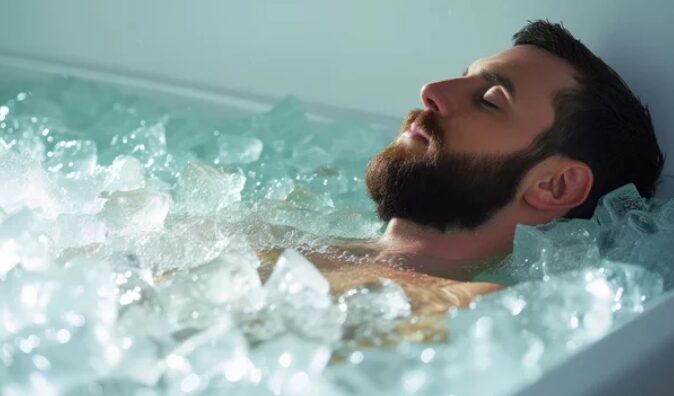
When you step into an ice bath, you’re not giving your body a vague, psychological worry. You’re giving it a clear, unambiguous, and immediate physical threat: hypothermia.
This triggers what we can call a “clean” stress response. Your hypothalamus sounds the alarm, activating the sympathetic-adrenal-medullary (SAM) axis.
This triggers a rapid activation of the sympathetic nervous system through the sympathetic–adrenal–medullary (SAM) axis. Within seconds, stress hormones surge, especially adrenaline and noradrenaline. Studies consistently show that norepinephrine can rise by 200–300% or more during cold exposure.
This stress isn’t one of the side effects of cold plunging; it’s actually the point.
Adrenaline mobilizes energy, increases heart rate, and sharpens senses. Noradrenaline drives focus, alertness, and attention. This flood is the biological basis for the mental clarity and energy boost people report. Your body is doing exactly what it’s designed to do: rally all resources to face a clear and present danger.
Cortisol’s Role: Support, Not Panic
Following this catecholamine surge, the hypothalamic-pituitary-adrenal (HPA) axis kicks in. This is the slower, longer-acting stress pathway. Your pituitary gland releases ACTH, which signals your adrenal glands to release cortisol.
In a novel or intense cold exposure, cortisol rises as well. That’s expected. Cortisol helps maintain blood sugar, supports energy availability, and manages inflammation during stress. In a healthy acute stress response, cortisol is precise and temporary.
The key difference between adaptive and harmful stress isn’t whether cortisol rises. It’s how long it stays elevated. In a controlled cold plunge, the rise is short-lived and followed by a clear recovery phase.
The Adaptation: From Overreacting to Resilience
This is where the long-term magic happens for stress hormone regulation. When you practice cold plunging regularly, your body begins to adapt. This is hormesis—the beneficial adaptation to a mild stressor.
Research on habitual cold exposure shows several consistent patterns:
Attentuated Response
The sheer magnitude of the catecholamine and cortisol spikes to the same cold stimulus can decrease. Your system learns the drill. It still responds, but without the same level of panic. This is habituation.
Faster Recovery
Perhaps more importantly, the recovery phase becomes quicker and more efficient. Hormone levels return to baseline faster after the stressor is removed. This is a sign of a resilient system.
Improved Sensitivity
Your HPA axis can become more sensitive and better regulated. It’s like tuning an engine for a more precise response. Some studies suggest regular cold exposure can lead to a steeper, healthier cortisol awakening response (CAR)—that natural morning spike that helps you get going—which is a key marker of HPA axis health.
In simple terms, the system becomes more responsive when needed and better at standing down afterward.
Re-establishing the “Off-Switch”
One of the biggest problems with modern stress is that it rarely ends cleanly. You’re stuck in a low-grade fight-or-flight mode. The deliberate practice of a cold plunge reinforces the critical connection between the stressor and the end of the stressor.
You get in (stress on), you endure, you get out (stress off). This repeated cycle of acute stress followed by definite safety trains your nervous and endocrine systems that “off” is a real state. The post-plunge period, especially if you focus on calm breathing, is a powerful activation of the parasympathetic nervous system and the vagus nerve. This actively inhibits stress hormone release. You are practicing the full arc of a stress cycle to completion, which is something modern life rarely allows.
The Norepinephrine Reservoir
Cold exposure has a unique effect on noradrenaline, a neurotransmitter strongly linked to alertness, motivation, and focus.
Unlike stimulants that create brief spikes followed by crashes, repeated cold exposure appears to improve baseline norepinephrine signaling and may also influence dopamine regulation. For people who struggle with brain fog, low energy, or difficulty sustaining attention, this can feel like a noticeable shift.
It’s not a replacement for sleep, nutrition, or medical care. But it does act as a natural training stimulus for the systems responsible for mental clarity and drive.
Using Cold Exposure to Train Stress Responsibly
If your goal is to use cold exposure to train your stress system, the strategy matters.
1. Time It for Hormonal Rhythm
Morning plunges align well with the natural cortisol awakening response. Evening plunges may disrupt sleep for many people.
2. Prioritize Consistency
Aim for 3–4 sessions per week in tolerable cold (10–15°C / 50–59°F) for 2–4 minutes. Regular exposure drives adaptation.
3. Don’t Skip the Recovery Phase
Spend a few minutes after the plunge focusing on slow, nasal breathing. This reinforces the parasympathetic “off switch.”
4. Watch for Signs of Overload
If you feel jittery, anxious, or fatigued hours later, you may need to reduce intensity or frequency. The goal is adaptive stress—not chronic activation.
A Training Tool for Your Stress System
Cold plunging doesn’t eliminate stress hormones. It teaches your body how to use them properly. By exposing yourself to a short, intense, physical stressor, you give your stress system a clear job to do. Over time, it learns to respond with strength, precision, and control, then recover efficiently when the job is done.
That’s the difference between a system that’s constantly activated and one that’s resilient. Cold exposure isn’t about becoming tougher for the sake of it. It’s about restoring balance, responsiveness, and trust in how your body handles stress.









Leave a Reply