


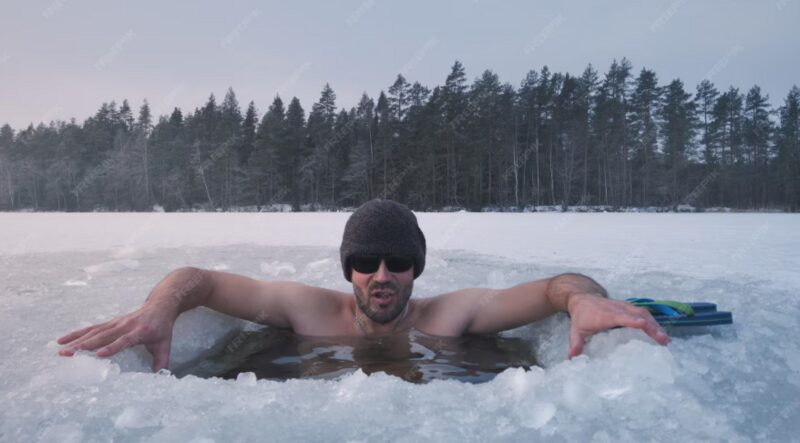
Okay, let’s get right to it. If you’ve ever stepped into an ice-cold lake or lowered yourself into a cold plunge, you know the immediate sensation: that sharp, breathtaking seize in your chest, and the feeling of your skin pulling tight. Most people think of this as just a shock. But for those who practice cold water swimming or deliberate cold water immersion regularly, that initial shock is just the entry point. What follows is a deep recalibration of one of the body’s most important systems: circulation. This isn’t a temporary flush or a short-lived sensation. It’s a repeated stress that forces the cardiovascular system to adapt—changing how blood moves, how vessels respond, and how the heart performs under pressure. For anyone interested in resilience, recovery, or long-term cardiovascular function, this is where winter swimming becomes more than a challenge.
Table of Contents
Training Vascular Control: Vasoconstriction and Vasodilation
The first and most dramatic lesson in circulatory education happens within seconds of immersion. Your peripheral blood vessels—those in your skin, hands, and feet—undergo a rapid, severe vasoconstriction. This isn’t a suggestion from your nervous system; it’s a command. Blood is shunted away from the surface and redirected to your core to protect your vital organs and maintain core temperature. It’s a survival reflex, a prioritization of resources that highlights just how much control your body has over its own plumbing.
The real training effect, however, occurs after you exit the water. As your body begins to warm up, blood vessels reopen through vasodilation. Often, they dilate more fully than before, producing the familiar warmth, redness, and tingling in the skin as oxygen-rich blood rushes back into the tissues.
This repeated cycle of constriction followed by expansion acts as a form of conditioning for the vascular system. With regular exposure, blood vessels become more responsive and flexible. They constrict when necessary and relax more efficiently when demand increases. This improved vascular responsiveness plays a meaningful role in blood pressure regulation, nutrient delivery, and overall cardiovascular efficiency.
Strengthening the Delivery Network: Capillaries and Blood Flow
Beyond large vessels, cold exposure may also influence circulation at a much smaller scale. According to research, repeated exposure to cold—a form of ischemic preconditioning where blood flow is temporarily reduced—may stimulate the body to grow new, tiny blood vessels, a process called angiogenesis.
Think of it like this: the cold-induced vasoconstriction creates a temporary “low-oxygen” state in your peripheral tissues. In response, your body might signal for the creation of new capillaries, the microscopic vessels where oxygen and nutrients are actually exchanged with your cells. For athletes or anyone interested in tissue health and repair, this is a big deal. More capillaries mean a denser, more efficient delivery network for fuel and a more effective removal system for metabolic waste like lactic acid. It enhances local endurance and recovery at the cellular level. While more human-specific research is still emerging, the broader concept of stress-driven vascular adaptation is well established in physiology.
The Heart’s Workout: Stroke Volume and Efficiency
Your heart is at the center of this circulatory storm. Cold water swimming initially increases heart rate and blood pressure as the body reacts to the sudden stress. With consistent exposure, however, the heart begins to adapt.
One potential adaptation is an increase in stroke volume—the amount of blood pumped with each heartbeat. When stroke volume improves, the heart doesn’t need to beat as frequently to deliver the same amount of blood. This increases efficiency and reduces overall cardiac strain.
This adaptation is particularly relevant for endurance athletes, where a lower resting heart rate and improved cardiac efficiency are key performance markers. Winter swimming may function as a complementary form of cardiovascular training, teaching the heart to remain effective under demanding conditions. Learn more about how cold plunges help boost heart health.
Lymphatic Mobilization: The Unsung Drainage System
While the blood vascular system gets most of the attention, the effects of cold water immersion on the lymphatic system are crucial for circulation in a broader sense. The lymphatic system is your body’s drainage network, responsible for removing cellular waste, toxins, and excess fluid. Unlike the blood system, it doesn’t have a pump (the heart); it relies on muscle contraction and external pressure to move.
The cold causes vasoconstriction, but the physical pressure of the water on the body and the intense muscle contractions from shivering (and the voluntary movement often involved in winter swimming) act as a powerful mechanical pump for the lymphatic vessels. This can significantly enhance lymph flow. Improved lymphatic drainage reduces interstitial fluid buildup (edema), decreases the load of inflammatory byproducts in the tissues, and supports a cleaner, healthier cellular environment. Over time, this may explain why regular cold exposure is often associated with reduced puffiness, less tissue congestion, and a general sense of physical lightness after sessions.
Long-Term Effects on Blood Pressure and Peripheral Health
Taken together, these adaptations can influence blood pressure regulation. More compliant blood vessels are better able to absorb pressure changes with each heartbeat, reducing strain on the system. Observational studies on regular cold water swimmers have shown associations with healthier blood pressure profiles, although individual responses vary.
Improved peripheral circulation also supports tissue repair, temperature regulation, and skin health. Extremities that typically suffer from poor circulation may benefit from repeated exposure to controlled cold stress, particularly when paired with proper recovery and nutrition.
Applying Winter Swimming for Circulatory Benefits
If you’re usingcold water swimming or ice baths specifically to target circulatory adaptation, the protocol leans into consistency and mindful exposure.
- Regularity is Non-Negotiable: The vascular system adapts to repeated stimuli. Aim for at least 2-3 sessions per week to see these training effects.
- Embrace the Contrast: The cycle of cold immersion followed by natural rewarming is where the training occurs. Don’t rush to a hot shower immediately after; allow your body to go through the vasodilation rebound naturally for at least 5-10 minutes.
- Movement in the Cold: If you’re in a natural body of water, gentle swimming or movement enhances the muscular pump effect, further stimulating both blood and lymphatic flow.
- Listen to the Response: The goal is to trigger the adaptive mechanisms, not to induce hypothermia. A 2-4 minute immersion in water between 10-15°C (50-59°F) is typically sufficient to initiate the full circulatory response.
The Final Plunge
Cold water swimming, at its core, is a profound dialogue with your circulatory system. It forces a state of extreme function—maximum constriction followed by maximum dilation—that your body would rarely experience otherwise. By voluntarily engaging in this dialogue, you’re not just enduring the cold; you’re instructing your body to build a more responsive, robust, and efficient network for moving the fluids of life. The result is a system that’s better at delivering resources, removing waste, and handling stress. When approached consistently and intelligently, winter swimming becomes less about endurance and more about long-term physiological resilience.




Leave a Reply